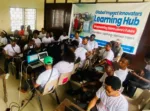
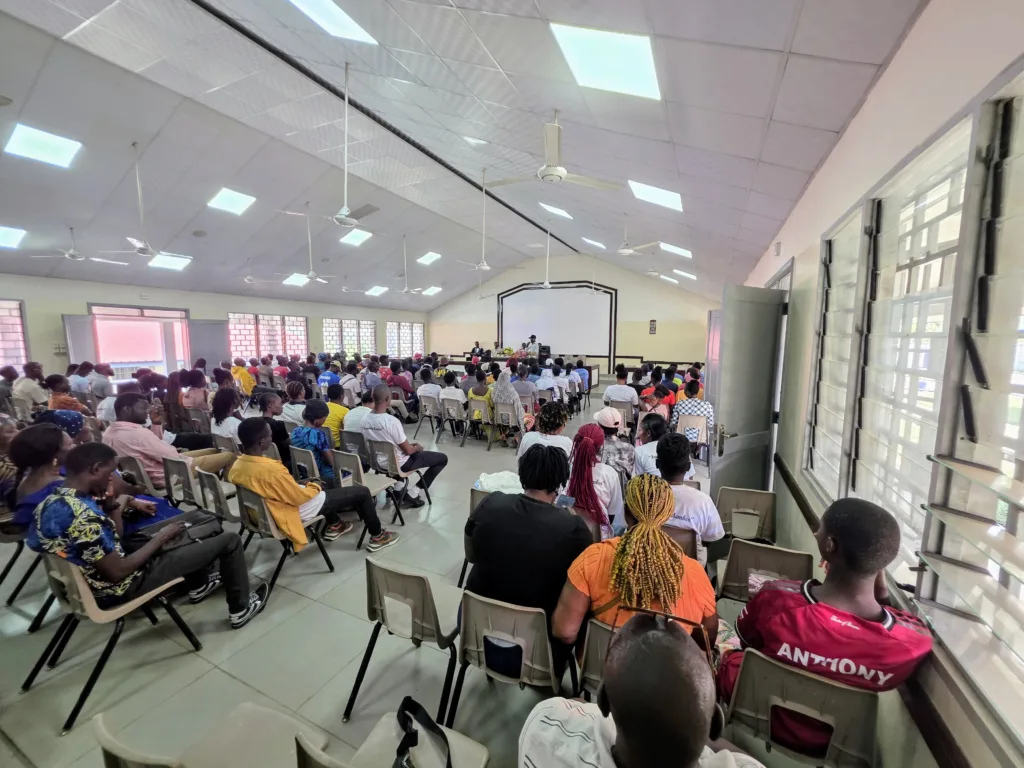
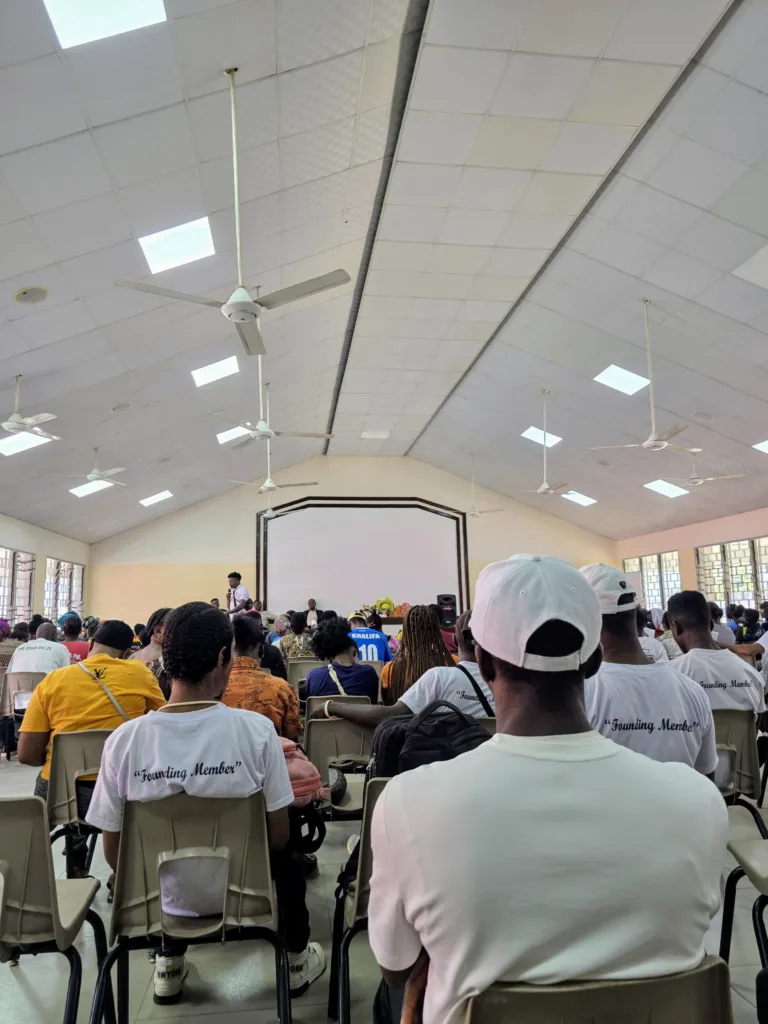
December 18, 2025 marked a turning point for Global Impact Innovators in Bo, Sierra Leone.
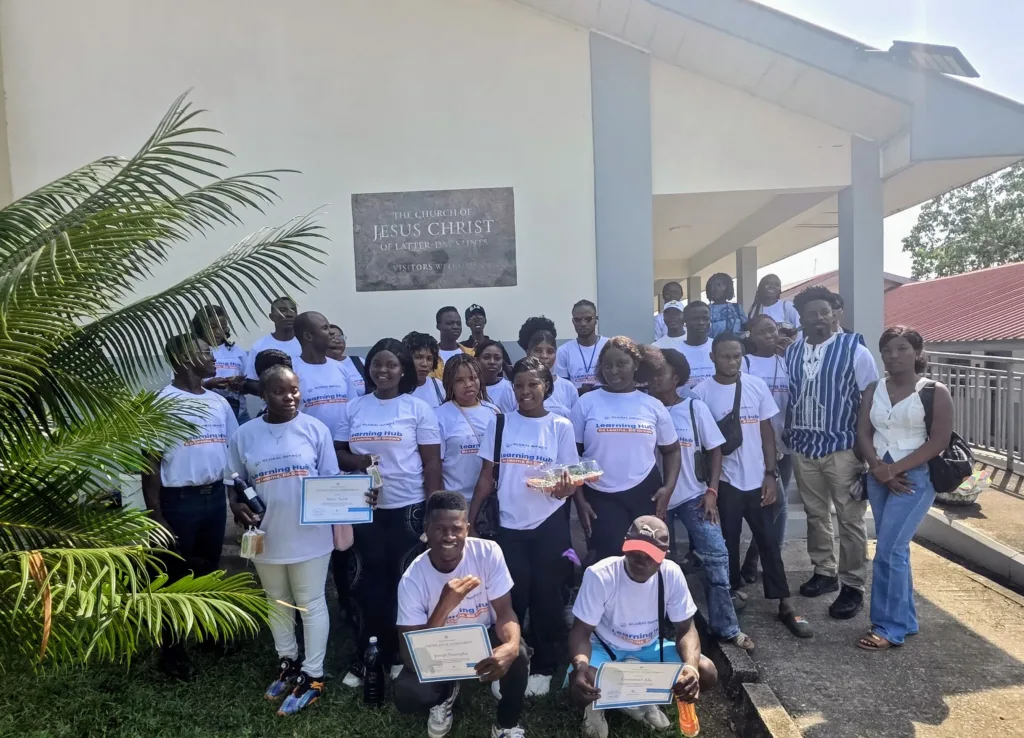
On a day filled with hope and determination, 40 entrepreneurs officially graduated from our three-month intensive entrepreneurship program—our first cohort in Bo. These individuals arrived with dreams but limited resources. They leave as certified business owners, armed with practical skills, business licenses, and most importantly, proof of concept through their first business ventures.
More Than a Certificate
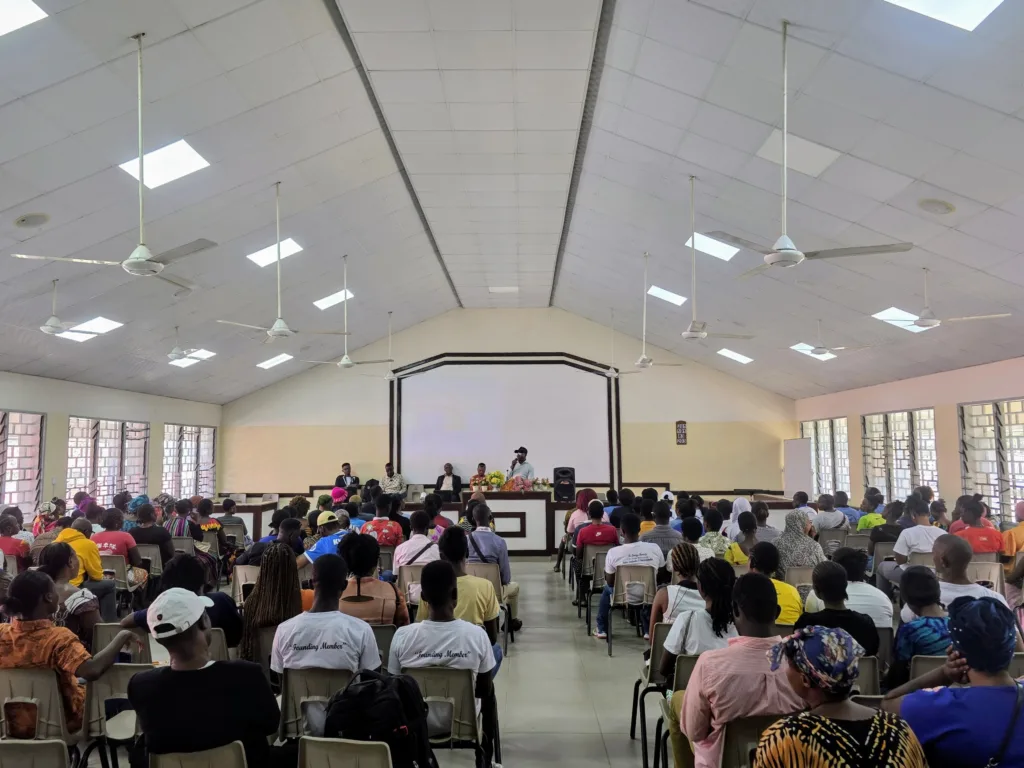
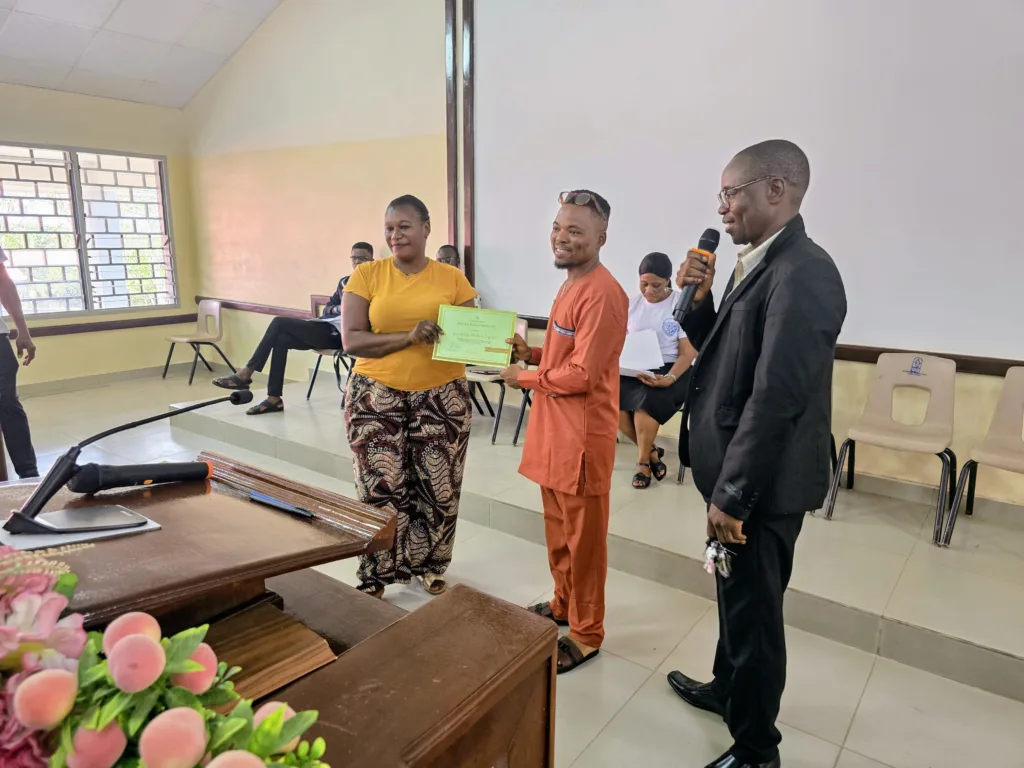
The December 18th graduation ceremony represented far more than handing out certificates. It symbolized the transition of 40 individuals from aspiring entrepreneurs to active business owners. Each graduate carried with them not just knowledge, but confidence—the kind that comes from building something real, failing forward, and learning how to operate as a legitimate business in their community.
Our three-month curriculum covered everything from business fundamentals and financial management to legal requirements and customer relations. But the real education happened when these entrepreneurs stopped taking notes and started taking action.
Four Groups, Four Different Futures
What makes this cohort exceptional is that the 40 entrepreneurs haven’t just completed training—they’ve already launched. They’ve organized themselves into four distinct business groups, each pursuing a different venture:
The Soap Making Collective represents our largest group, combining traditional knowledge with modern business practices. Soap production has deep roots in Bo, and these entrepreneurs are scaling it from household craft to commercial operation. They’ve secured supplies, established quality controls, and are already serving local retailers.
The Cake Decoration Specialists saw an untapped market opportunity at celebrations and special events. With training in food safety, design principles, and pricing strategies, they’ve begun taking orders from the community. What started as weekend side work is becoming a structured, profitable business.
The Gara Tie-Dye Group represents traditional textile artistry meeting modern business standards. Gara tie-dye is rooted in Sierra Leonean culture, but these entrepreneurs are scaling production, establishing consistent quality, and finding distribution channels beyond local markets. They’re proving that heritage crafts can be profitable businesses.
The Catering Service Group identified opportunity in the growing demand for professional food services at events and celebrations. They’ve developed menus, established food safety protocols, and begun taking bookings. From weddings to corporate events, they’re building a reputation for reliability and quality.
Each group received micro-loans to launch their operations—not charity, but an investment in their success. These aren’t just personal ventures; they’re creating employment within their own networks and contributing to the local economy.
The Hidden Curriculum: Learning to Work Together
Here’s what makes this cohort’s achievement even more significant than the numbers suggest: these 40 entrepreneurs didn’t just learn to start businesses in isolation. They learned to build them together.
When we designed the program, we intentionally structured it around group entrepreneurship rather than individual ventures. This decision forced our graduates to develop skills that no business school alone can teach—the ability to work collaboratively, to resolve conflicts, to delegate, to hold each other accountable, and to
share both success and failure.
The Advantages of Going Together
Working as groups created several powerful benefits. First, it distributed risk. If one group member had a family emergency or personal crisis, the business didn’t collapse because others stepped in. This resilience is crucial in communities where individual hardship is constant and unpredictable.
Second, it multiplied capacity. The Soap Making Collective, for instance, could handle production, quality control, supply chain, and marketing because multiple people owned pieces of those responsibilities. No single person had to be expert at everything—they had to be committed to the group.
Third, it created accountability. It’s easy to slack off when you’re only answerable to yourself. It’s harder when five teammates are counting on you to show up and do your part. This peer accountability proved more powerful than any external supervision.
Fourth, it fostered knowledge sharing. When one group member learned something—a new production technique, a better supplier, a customer service approach—they taught the others. Learning multiplied across the group rather than staying siloed.
The Challenges They Overcame
But getting here wasn’t smooth. Group entrepreneurship is harder than it looks, and these entrepreneurs faced real obstacles.
Communication was the first hurdle. How do you make decisions as a group? Who gets the final say? What happens when members disagree on direction or resource allocation? In the first weeks, groups struggled with unclear authority and unresolved conflicts.
Trust had to be earned. Some group members didn’t know each other beforehand. Why should they trust someone else with their livelihood? This required deliberate team building, transparent financial management, and demonstrated follow-through. We emphasized that business groups are built on the same foundation as any strong community—shared values and mutual respect.
Unequal contribution emerged as a challenge. Not everyone brought the same energy or skills to the group. Some members pulled more weight than others. This created resentment if not addressed. Groups learned to have honest conversations about expectations and to adjust roles based on actual capacity and motivation.
Profit-sharing decisions proved complicated. When the group makes money, how do you divide it fairly? Do you split equally? Do you pay based on contribution? Do you reinvest most of it in the business? Groups had to develop their own governance systems, and not every group’s first system worked perfectly. But they learned to adjust, to communicate, and to find solutions that felt fair to members.
The Training That Made It Work
We didn’t just throw 40 people into four groups and hope for the best. Our curriculum included dedicated modules on team dynamics, conflict resolution, and collaborative decision-making. We brought in local mentors who could model healthy team behavior. We required groups to establish written agreements about roles, responsibilities, and profit distribution before they received their micro-loans.
Most importantly, we normalized struggle. We told them: “Groups are messy. Conflict isn’t a sign of failure—it’s a sign that you’re figuring out how to work together. What matters is whether you’re willing to communicate through it.”
What Group Entrepreneurship Teaches
By graduating as group entrepreneurs rather than individual business owners, these 40 people learned something profound: individual ambition matters, but collective success is often stronger. They learned that their personal success is tied to their group’s success, and their group’s success is tied to their community’s wellbeing.
In a global economy that’s becoming increasingly collaborative—where remote teams, partnerships, and networks matter more than solo performance—they’re learning lessons that even advanced business schools struggle to teach.
They’re learning that breaking out of poverty isn’t just an individual achievement. It’s a collective one.
What This Graduation Really Means
In Silicon Valley, we talk about “proof of concept” and “product-market fit.” In Bo, we’re seeing the same principles playing out in the real world, with real stakes. These 40 entrepreneurs didn’t have the luxury of venture funding or fail-fast pivots. Their success is existential—it directly impacts their families’ wellbeing and their communities’ prosperity.
Three months ago, many of them had never started a business before. They’d never written a business plan, calculated unit economics, or negotiated with suppliers. Some had limited formal education. But they had hustle, community trust, and a clear-eyed understanding that education is the pathway out of poverty.
What they learned wasn’t theoretical. It was practical, applicable, and immediately relevant to their context.
The Broader Picture
This cohort represents something we’re seeing across all of Global Impact Innovators’ operations: there is no shortage of entrepreneurial talent in rural Africa. The shortage is in access to training, capital, mentorship, and belief.
When you give people quality education, practical business skills, and a small amount of seed capital, extraordinary things happen. They don’t need Silicon Valley’s permission or complex funding mechanisms. They need clarity, confidence, and community support.
The 40 graduates of Bo represent 40 households potentially lifted toward stability. They represent 40 examples their neighbors will follow. They represent hope that education and opportunity can begin to reshape the economic landscape of their community.
What Comes Next
The graduation wasn’t an ending—it was a beginning. These four business groups will now operate in real market conditions. Some will thrive, some will struggle, some will pivot. Our role is to provide ongoing mentorship, help them navigate challenges, and ensure their success isn’t a one-time event but the start of sustainable livelihoods.
We’re already planning for additional cohorts, building on what we’ve learned from this first group. The demand is enormous. For every 40 who graduated, there are hundreds waiting for their chance.
The Why
When I started Global Impact Innovators years ago, it was because I met young people in Sierra Leone and across Africa who had incredible potential but no pathway forward. The education system wasn’t preparing them for the real world. Poverty wasn’t a character flaw—it was simply lack of opportunity.
Every business launch in Bo, every entrepreneur who moves from survival to stability, every community member who gains dignity through their own effort—that’s why we do this work. That’s why education, combined with practical opportunity, is so powerful.
These 40 entrepreneurs are proof that when barriers are removed, people will innovate, create, and build. They’re proof that opportunity isn’t found—it’s created.
Thank You
This graduation couldn’t have happened without the support of our mentors, our local partners in Bo, the educators and trainers who gave countless hours, and the donors who believed that investing in African entrepreneurs was worth their resources.
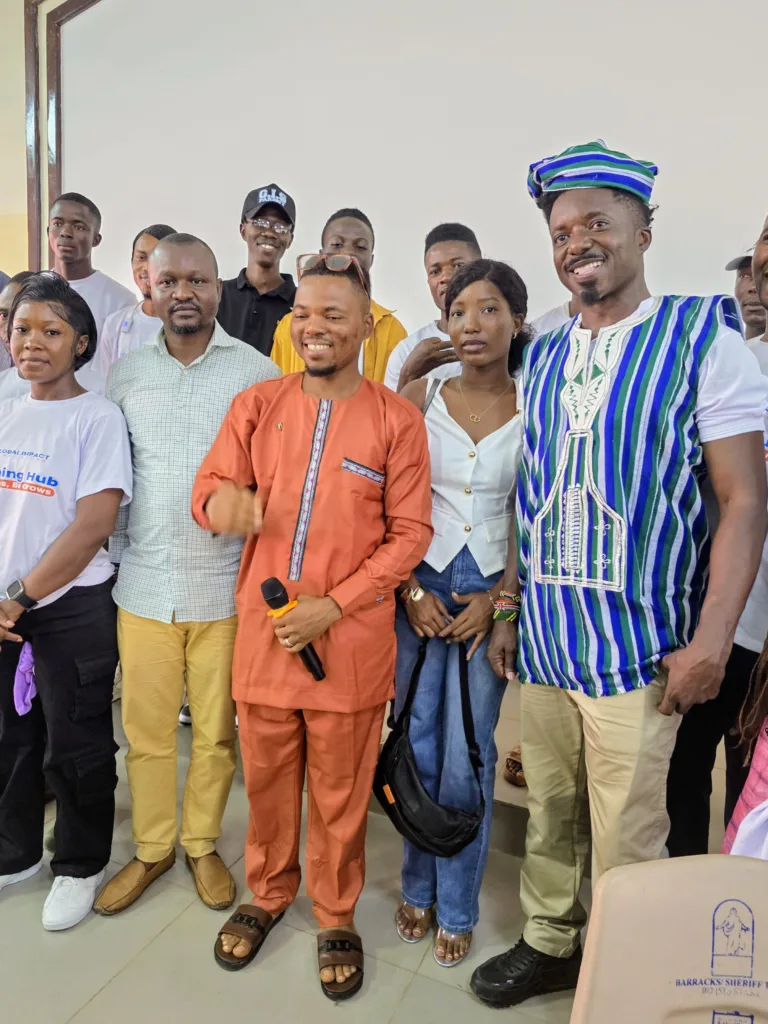
Most importantly, congratulations to the 40 graduates. You’ve shown incredible courage in stepping into entrepreneurship. You’re not just building businesses—you’re building the future of your community.
The best is yet to come.
Global Impact Innovators operates across Sierra Leone, Kenya, and beyond, providing free technology and entrepreneurship training to underserved communities. Through our Digital Education Centers, we’ve trained over 600 learners weekly, with particular focus on breaking poverty barriers through education and opportunity.
Read more about how we support youth and women in Africa through our entrepreneurship training programs.